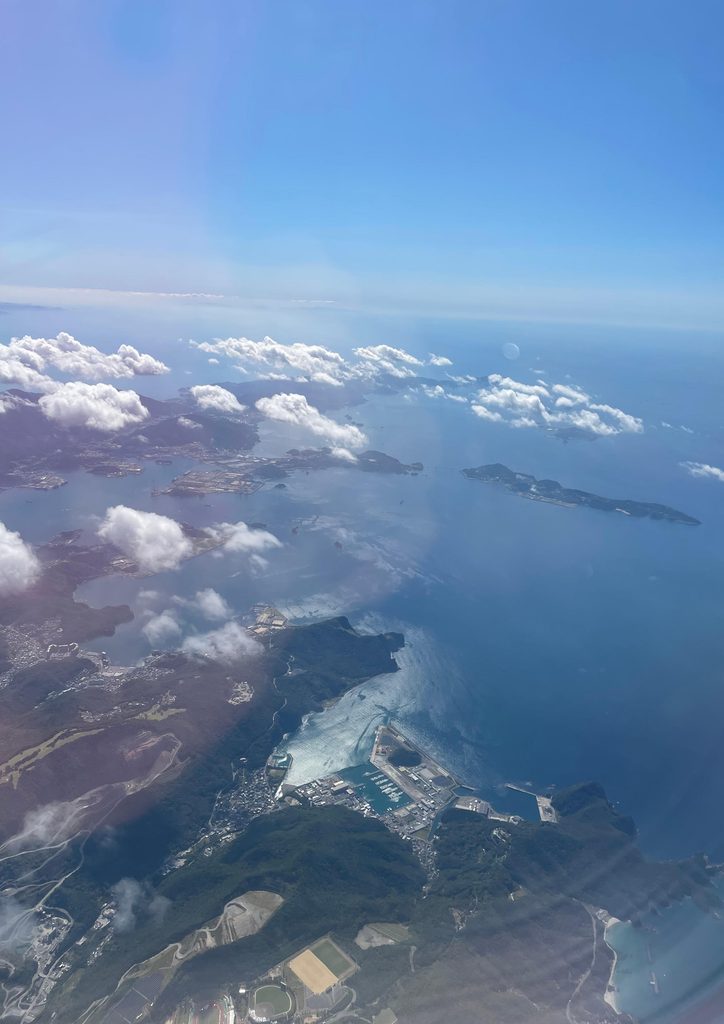
Distant Relatives
As a child, I somehow convinced myself that just as I had relatives scattered across the country, I must have relatives all over the world, too. I imagined that eventually, I’d get to travel the globe visiting them. It made perfect sense to my young mind: if life is finite, surely at least that much ought to be guaranteed.
I still remember the slight shock of discovering that, in reality, I didn’t have a single relative overseas.
“Life’s guarantees simply don’t match the vastness of the world.”
I feel that this realization was one of the sparks that led me to art. For as long as I can remember, expressing myself has been a space where an unknown world intersects with familiar feelings. Even when I was small, during school lessons involving drawing or writing poetry, I could pull out something that felt genuinely “me” without the slightest friction. Regardless of what others thought, at the very least, it felt completely natural to me. I didn’t even like it—not one bit—and no matter how bored I was at home, I have no memory of ever engaging in creative activities on my own. And yet, I must have intuited that artistic expression was the key to bridging the chasm between a finite life and an infinite world.
When I think about it that way, while there are countless physically unknown places out there, I suspect there is no such thing as an essentially unknown feeling. Perhaps it is merely a matter of having forgotten things we had already encountered somewhere before.
It would be wonderful if, somewhere far beyond my sight, my work could become something like a “distant relative” to a complete stranger.
2025/09/03
The Phenomenology of Shadow: The Shadow of Modernity
It goes without saying that focusing on something moves the creative process forward. However, behind that focus, everything left unfocused quietly accumulates. In psychology, this is what we call the “shadow.” Hayao Kawai’s The Phenomenology of Shadow is a masterpiece that brilliantly analyzes the creation of, and conflict between, all kinds of shadows.
Modernity could be defined as an era where the strong light of progress cast correspondingly deep shadows. In the contemporary world, the “shadow side”—once positioned behind modernity—attempts to push forward with its own firm convictions. Yet, the harder it tries, the more the “light that modernity once believed in” accumulates behind it. In other words, pushing an extreme rejection of the modern ultimately leads back to the re-emergence of the modern itself.
In artistic practice, surprisingly interesting discoveries often lie hidden behind what we focus on. But if you try to catch what’s behind you with a calculating eye, you soon realize there is nothing there. Without a genuine, earnest effort directed somewhere forward, what lies behind will never mature. On the other hand, as long as you press onward with absolute conviction, it never even occurs to you to look back—and even if you did, you wouldn’t find any value in it.
If only we could enter that state of simply “being here, now,” without the need to push forward or look back, interesting things and sudden insights would naturally arise. Yet the modern mindset of forward progress is so deeply ingrained within our era that we remain obsessed with predicting the future, constantly looking only ahead.
2024/05/09
A Métier on the Ground
The first time I heard the mysterious word “métier” goes back to my art school days. I still vividly remember the scene where a senior student two years above me was told by a teacher, “Your work has no métier.” In actual spoken conversation, that might have been the only time I ever heard it used. In other words, it is a word gathering dust today.
Back then, even without knowing its exact definition, I understood it was the kind of comment that would sting deeply if said to you.
In the art world, the word is typically used to mean “a unique style or expression.” How many artists today, I wonder, consciously choose to embrace its other side—“the refined craftsmanship of a skilled artisan”?
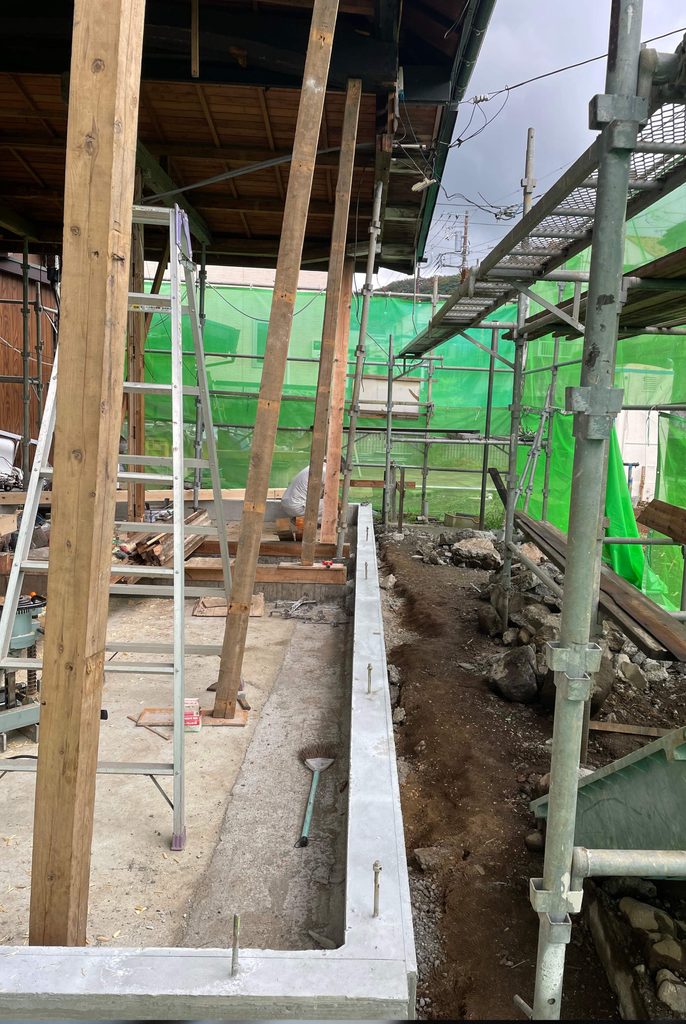
There have always been many artists, past and present, who deeply disdain the word “technique.” Yet, having been familiar with construction sites since childhood, I possess a foundation that allows me to envision a scene quite different from others when I hear the words “refined craftsmanship.” That scene is like a temple standing atop a hill.
When hearing “the refined craftsmanship of an artisan,” hardly anyone pictures a descent into nothingness or the underworld. For me, the “technique” implied by métier is an awareness directed at the point of contact between the ground and what rises above it.
Art can easily journey into the underworld—a path that often looks far more dramatic and accessible than trying to stand on solid ground. Yet I believe métier is something that dwells in the desire to remain an existence truly rooted on this earth.
2024/04/06
Ambivalent Existence
Since ancient times, high mountains have been said to draw down energy from the heavens. According to someone I once spoke with, women traditionally held the role of receiving words from above, while men took on the duty of transcribing those received words into text. Over time, however, the men responsible for writing gained power, establishing a structure that has persisted into the modern era. Similarly, in Ancient Shinto, it is well known that the Saniwa (medium/interpreter) received divine revelations and conveyed their meanings to the people, but there was always someone by their side whose role was simply to observe and watch over them. In either case, it forms a two-person team: the “receiver” of words from a higher dimension, and the “observer.”
In my own creative expression, I have long been fascinated by the ambivalence between consciousness and the unconscious. Thus, I contrast the woman who receives heavenly words and the man who watches over her with the relationship between consciousness and the unconscious.
However, even if we group these opposing elements under the single term “ambivalent,” practicing that way of being is far from simple. For instance, if you focus solely on its height, a high mountain appears masculine. Yet Mount Fuji is equally defined by the broad expanse of its skirt, which seamlessly merges into the earth. Viewed this way, the height of Mount Fuji can be seen as an extension of Mother Earth itself.
When the conscious mind (language) tries to categorize things ambivalently too quickly, it prematurely cuts off a rich reality, leaving the unconscious behind. In the end, there is no choice but to strive to “embody a state that holds both natures within.”
2024/01/29